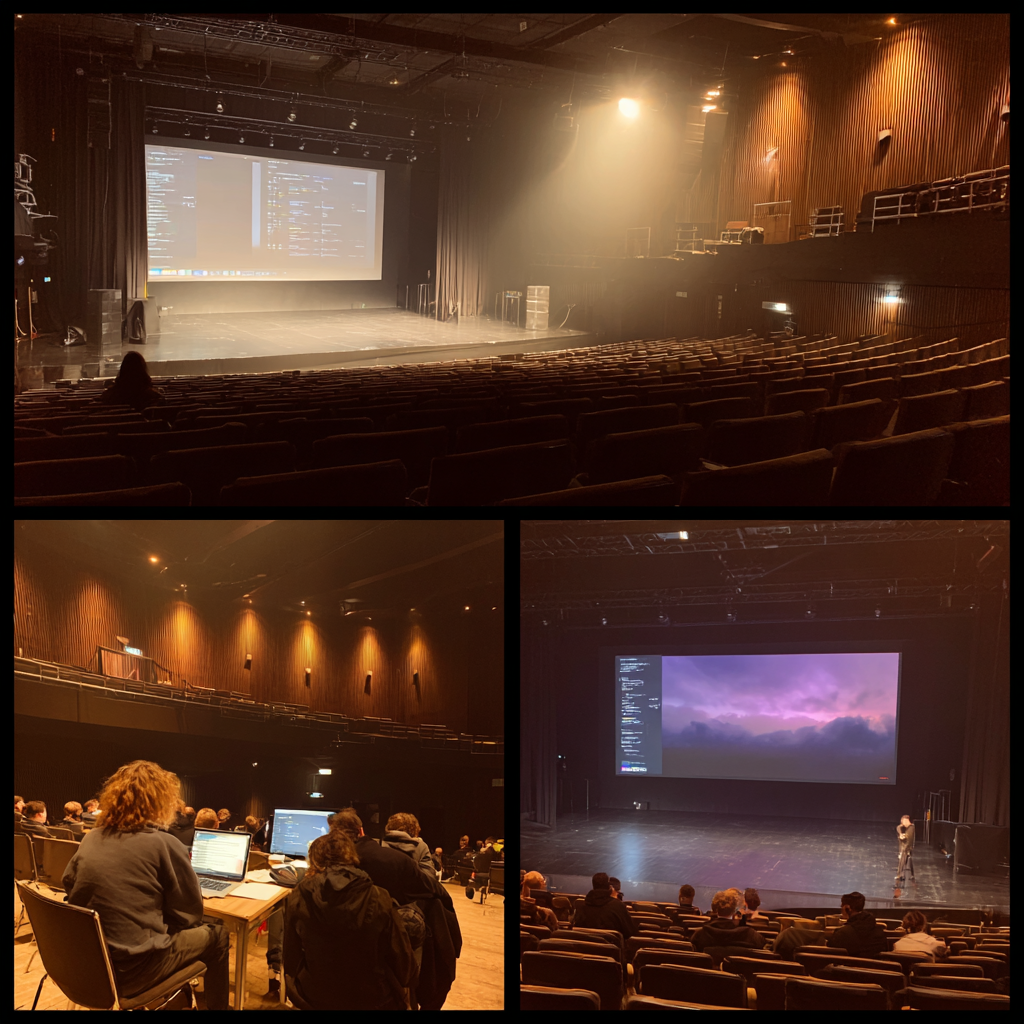
How Hybrid Conferences in 2026 Are Changing Requirements for Venue, Agenda, and Technical Crew
Hybrid conferences are no longer treated as a temporary compromise between physical and virtual attendance. By 2026, they have become a more deliberate format shaped by audience selectivity, measurable outcomes, and practical technology use. Cvent’s 2026 event trends report describes the year as one defined by intentionality, with AI moving from experimentation to operational use and attendees placing higher value on relevance, trust, and meaningful engagement. In parallel, hybrid and virtual event technology continues to expand reach and create new ways to engage audiences beyond the room itself.
That shift has changed the basic logic of conference planning. A venue is no longer chosen only for capacity and location. An agenda is no longer built only for the people sitting in front of the stage. A technical crew is no longer just an AV support layer working in the background. In a 2026 hybrid conference, all three have to function as part of a single delivery system. The room has to serve both the audience in the hall and the audience on the stream. The program has to work for live presence and remote attention spans at the same time. The technical team has to run production, platform continuity, and audience experience as one coordinated operation.
The first major change is in how venues are evaluated. Industry reporting tied to IACC’s 2025 Meeting Room of the Future research shows that planners now rank physical characteristics, lighting, acoustics, and flexibility above many traditional venue perks, and that spaces must support different formats such as keynotes, collaboration, and networking rather than simply providing square footage. In other words, the room is now expected to perform. It has to adapt quickly, look good on camera, sound clean both in-person and online, and transition between formats without friction.
For hybrid conferences, this makes acoustics and lighting especially important. A room that feels acceptable to people on site can still fail for remote participants if speech is muddy, microphones pick up too much room reflection, or lighting makes speakers look flat and tired on camera. Likewise, a space that looks attractive in photos may still be awkward for hybrid production if camera lines are blocked, power access is poor, or the room cannot support cable runs, switching points, confidence monitors, and operator positions. Hybrid planning now requires venue assessment through both an event lens and a broadcast lens.
Internet infrastructure has also moved from background requirement to strategic priority. AVIXA’s hybrid event production guidance stresses the need for dedicated, high-speed internet with enough bandwidth for simultaneous uploads and downloads, with wired connections preferred to reduce latency and interruptions. Older conference planning often assumed that venue Wi-Fi was a convenience layer. In hybrid conferences, connectivity is production-critical infrastructure. If the connection fails, the event does not simply become less convenient. It becomes partially invisible to the remote audience. That changes what organizers must ask venues during sourcing. Bandwidth guarantees, redundancy, wired paths, and technical escalation procedures now belong in the same conversation as catering and room layout.
The second major shift is in agenda design. Hybrid conferences can no longer rely on the assumption that one session format works equally well for both audiences. Cvent’s hybrid meetings framework describes content as one of the central building blocks of hybrid design, and current industry guidance emphasizes that virtual and in-person participants are distinct audiences with different expectations. That means the agenda must be built with two attention patterns in mind: the immersion of being physically present and the fragmentation of joining through a screen.
As a result, hybrid agendas in 2026 are becoming more modular. Long passive sessions are harder to justify unless they are supported by very strong speakers, visual clarity, and clear viewer value. Shorter segments, cleaner transitions, live Q&A windows, structured breaks, and content blocks designed for replay or clipping work better for mixed audiences. Remote attendees need moments of direct inclusion, not just access to a camera feed pointed at a stage. On-site participants, meanwhile, still expect the room to feel alive rather than slowed down for the sake of the stream. Good hybrid agendas now balance these pressures by treating online participation as a designed experience, not a secondary broadcast output.
This also affects speaker preparation. In a traditional conference, a speaker may primarily focus on the room’s energy. In a hybrid conference, they must also know where the cameras are, when to address remote participants, how live polls or digital questions will be integrated, and how much visual information slides need to carry for viewers on smaller screens. The growing importance of trust and relevance in 2026 event strategy makes this even more important. People joining remotely are quicker to disengage if the session feels like an afterthought or if the speaker never acknowledges their presence.
The third and perhaps most underestimated change is in the technical crew itself. In a purely in-person conference, the AV team might mainly manage sound, projection, and room cues. In a hybrid conference, the crew becomes part event team, part live broadcast team, part platform support operation. Encore’s staffing guide for hybrid events emphasizes that success depends on coordinated management of logistics, staffing, and technology so that both virtual and in-person elements run smoothly. This turns the technical team into a more specialized structure rather than a single generic AV unit.
In practical terms, hybrid conferences increasingly require clearly separated roles: audio engineers focused on room and stream quality, video operators or switchers controlling camera logic, streaming or platform specialists monitoring delivery, stage managers coordinating timing, and support staff who can respond to remote-user issues while the live program continues. AVIXA also highlights the importance of high-quality cameras, microphones, and switchers because clear sound and visuals are central to credibility and engagement for remote attendees. The point is not only to avoid breakdowns. It is to produce continuity. A hybrid conference now succeeds when the remote participant feels intentionally included and the in-room participant does not feel trapped inside a television studio.
AI is starting to influence this structure as well. Cvent’s 2026 trends report notes that AI is moving into practical uses across the event lifecycle, including sourcing, personalization, and data analysis. For hybrid conferences, this means more operational support around agenda recommendations, attendee routing, content summaries, and post-event insight. But AI does not reduce the need for human crew. It actually raises the need for teams who can interpret tools, maintain quality control, and step in when automation cannot manage live complexity. In 2026, technical teams are becoming less manual in some tasks and more strategic overall.
The larger lesson is that hybrid conferences are no longer planned by adding a stream to a physical event. They are planned as dual-environment experiences from the beginning. That is why venue requirements are stricter, agenda design is more modular, and technical crews are more specialized. The hybrid conference of 2026 is not defined by compromise. It is defined by integration. And the organizers who understand that earliest are the ones most likely to deliver events that feel coherent, credible, and worth attending from either side of the screen.